
How Childhood Experiences Can Follow Us Into the Bedroom
Key Takeaways
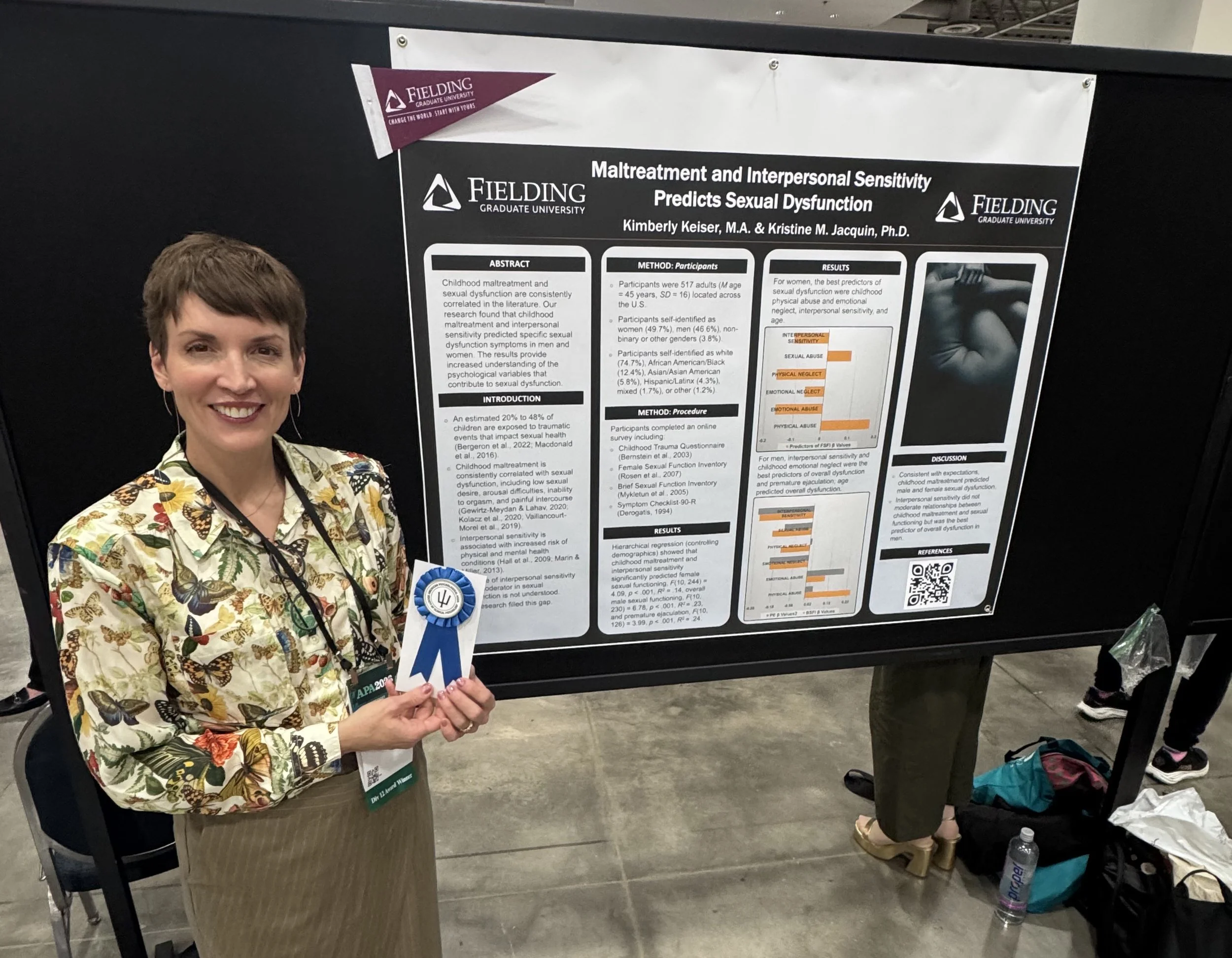
Kimberly Keiser received the APA Division 12 Society of Clinical Psychology poster award for original research examining why childhood abuse and neglect can affect sexual functioning decades later. In a survey of more than 500 U.S. adults, childhood maltreatment and interpersonal sensitivity each made their own contributions to sexual difficulties. Among women, physical abuse and emotional neglect stood out; among men, interpersonal sensitivity was the strongest predictor of overall sexual dysfunction. The findings suggest that persistent sexual symptoms may reflect what a person's body learned about safety and vulnerability, not just technique or relationship problems.
Kimberly presented at the American Psychological Association conference in Washington, D.C., on August 6 and received the Division 12 Society of Clinical Psychology poster award for original research examining the role of interpersonal sensitivity in sexual dysfunction.
We often think of sexual problems as something that happens in the bedroom. Low desire, difficulty becoming aroused or maintaining erections, trouble reaching orgasm, painful sex, or ejaculating sooner or later than desired can seem like problems with the body—or with the relationship. Kimberly’s research continues to demonstrate that some sexual difficulties may have roots that reach much further back.
For years, researchers have found a connection between childhood abuse and neglect and sexual difficulties in adulthood. What has been less clear is why those early experiences might continue to affect sexuality decades later. Kimberly’s study looked at one psychological factor that may help us better understand that connection: interpersonal sensitivity.
What Is Interpersonal Sensitivity?
Interpersonal sensitivity describes how strongly we react to and interpret our interactions with other people. Someone with high interpersonal sensitivity may be especially attuned to rejection, criticism, judgment, disapproval, or signs that another person is unhappy with them. That sensitivity matters when we talk about sex because sex is inherently interpersonal. Even when our bodies are functioning normally, satisfying sexual experiences often require us to tolerate vulnerability: being seen, touched, desired, evaluated, and emotionally exposed.
For someone who grew up experiencing abuse, neglect, rejection, or an unpredictable emotional environment, that vulnerability may feel very different. The nervous system learns from experience. A child who learns that relationships are not always safe may become an adult who is particularly vigilant about what other people are thinking and feeling. During sex, that might look like worrying about a partner's reaction, becoming overly focused on sexual performance, struggling to remain present in the body, or becoming distracted by negative thoughts.
What Was Studied
Kimberly and her research supervisor, Kristine Jacquin, surveyed more than 500 adults in the United States, with an average age of 45. Participants answered questions about childhood experiences, psychological symptoms, interpersonal sensitivity, and their current sexual functioning. They wanted to know whether childhood abuse or neglect could help predict sexual difficulties later in life—and whether interpersonal sensitivity would increase the likelihood of greater sexual dysfunction after childhood abuse or neglect.

What Was Found
Among women, sexual difficulties were particularly associated with childhood physical abuse, childhood emotional neglect, interpersonal sensitivity, and age. The age variable makes sense because aging, in general, is associated with decreased sexual functioning. However, it is striking that physical abuse and emotional neglect were more strongly associated with interpersonal sensitivity and sexual dysfunction, especially when childhood sexual or physical abuse is more commonly thought to be harmful.
Among men, childhood emotional neglect and interpersonal sensitivity emerged as particularly important predictors of sexual difficulties. Interpersonal sensitivity was actually the strongest predictor of men's overall sexual dysfunction in our analysis. Premature ejaculation (PE) was most affected by childhood abuse and neglect and interpersonal sensitivity. This finding is interesting and leads to more questions, such as: Why PE and not erectile dysfunction?
One of the most interesting findings was what they didn't find. They originally wondered whether interpersonal sensitivity might explain or change the relationship between childhood maltreatment and adult sexual functioning. Statistically, it did not work that way. Childhood maltreatment and interpersonal sensitivity appeared to make their own contributions to sexual functioning.
Sexual Dysfunction Isn't Always Just About Sex
When someone comes to therapy because they are experiencing sexual dysfunction, it can be tempting to focus exclusively on sexual technique, relationship problems, or other mental health problems. It may be more important to ask: What has this person's body learned about intimacy?
Childhood abuse and neglect occur during the years when we learn some of our earliest lessons about relationships. We learn whether other people are safe, whether our needs matter, whether we can trust someone when we are vulnerable, whether our bodies belong to us, and whether closeness feels comforting or threatening. Those lessons do not necessarily disappear when someone becomes an adult.
Sex asks many of the same systems to come online again: trust, vulnerability, bodily awareness, attachment, pleasure, boundaries, and the ability to remain emotionally and physically present with another person. That may help explain why something that happened years—or even decades—earlier can still show up in a person's sexual life.
The Body Has a History
Perhaps the most useful way to understand the findings is that sexual functioning doesn't happen separately from the rest of our psychological and relational history. Our sexual selves develop within the same nervous system that experienced our childhood relationships. For people who experienced childhood abuse or neglect, sexual difficulties may be about much more than sexual performance. They may reflect longstanding adaptations involving safety, vulnerability, self-consciousness, emotional connection, and the ability to remain present in one's body while being intimate with another person.
That doesn't mean everyone who experienced childhood abuse and neglect will develop sexual problems or that childhood trauma explains every sexual difficulty. It does mean that when sexual symptoms persist, looking beyond the symptom itself may give us a more complete understanding of what is happening.
Ask yourself: What did my body learn about being vulnerable with another person—and is it still trying to protect me?
Thank you to Melanie Morse and the APA Division 12 Society of Clinical Psychology for the opportunity to present.

Frequently Asked Questions
What is interpersonal sensitivity?
Interpersonal sensitivity describes how strongly we react to and interpret our interactions with other people. Someone with high interpersonal sensitivity may be especially attuned to rejection, criticism, judgment, or signs that another person is unhappy with them. It matters for sexuality because sex is inherently interpersonal and asks us to tolerate vulnerability: being seen, touched, desired, evaluated, and emotionally exposed.
Can childhood abuse or neglect cause sexual problems in adulthood?
Researchers have found a connection between childhood abuse and neglect and adult sexual difficulties for years, and this study of more than 500 U.S. adults supports that link. That said, not everyone who experienced childhood maltreatment will develop sexual problems, and childhood trauma does not explain every sexual difficulty.
What did the study find for women?
Among women, sexual difficulties were particularly associated with childhood physical abuse, childhood emotional neglect, interpersonal sensitivity, and age. The age finding fits what is already known, since aging in general is associated with decreased sexual functioning.
What did the study find for men?
Among men, childhood emotional neglect and interpersonal sensitivity emerged as particularly important predictors of sexual difficulties. Interpersonal sensitivity was the strongest predictor of men's overall sexual dysfunction, and premature ejaculation was the sexual difficulty most affected by childhood abuse, neglect, and interpersonal sensitivity.
Does emotional neglect matter even without physical or sexual abuse?
In this study, childhood emotional neglect was an important predictor of sexual difficulties for both women and men. That is striking because sexual or physical abuse is more commonly assumed to be the most harmful, yet the findings suggest emotional neglect can leave its own lasting mark on adult intimacy.
How can therapy help with trauma-related sexual difficulties?
Rather than focusing only on sexual technique or relationship problems, therapy can explore what a person's body learned about intimacy: whether other people are safe, whether their needs matter, and whether closeness feels comforting or threatening. When sexual symptoms persist, looking beyond the symptom itself may give a more complete picture of what is happening.
Who conducted this research?
Kimberly Keiser conducted the study with her research supervisor, Kristine Jacquin, surveying more than 500 adults in the United States. She presented the findings at the American Psychological Association conference in Washington, D.C., where the work received the Division 12 Society of Clinical Psychology poster award.
