
Sedona: A Nervous System-Informed Family Retreat for Wellbeing

Key Takeaways
A trauma-specialized therapist shares her real-world, day-by-day account of planning a 7-day family wellness retreat in Sedona, Arizona.
The retreat followed a clinically sequenced framework — Downshift → Safety → Emotional Processing → Insight → Connection → Integration → Transition — adapted in real time for children of varying ages and unpredictable conditions.
The core takeaway: families don't need perfect experiences to heal and grow — they need the consistent presence of intentional, regulated adults.
Sedona: A Nervous System-Informed Family Retreat for Wellbeing
For years I have been attending retreats, clinical training workshops, and traveling freestyle in all ways possible. Given my experience in cultivating healing experiences as a therapist and my love for travel, I planned a 7-day wellness retreat for my family this year in Sedona, Arizona. I learned a lot about how to plan a wellness retreat versus being an attendee at one planned for you, but more importantly, how to integrate diverse age-appropriate activities at the same time. My children, between the ages of 10 and 15 years old, and our 23-year-old au pair also joined.
We finally figured out how to vacation like ourselves. We took some dares and changed the formula for how we travel as a family. I was intentional about planning amazing experiences that truly are rejuvenating, but also how to go with the flow when the plans don’t always occur like we hoped. So often, we’re tossed and turned by the specifics of travel: the long car ride, the race to the plane, the overstuffed luggage and the whims of children. Family life is so busy, and it was important to me to plan to do nothing at times. It was also important to connect with nature - no devices, phones - just family, solo time when each person needed or wanted it, and self-care.
I chose Sedona because it is well known for its healing spaces. Sedona's striking beauty provides a tangible sense of stability and wonders gently allowing us to switch gears and give ourselves over too awe. As both a clinician specializing in trauma and attachment and as a deeply attuned parent, I view all environments—and especially a structured retreat—through the lens of nervous system interaction. Deep, lasting healing is never a solitary endeavor; it is an inherently personal yet shared process that unfolds best when the entire family is given space to settle.
I bring this into my clinical practice directly in my therapeutic relationships with clients, but also through leading interpersonal psychotherapy groups, and using Internal Family Systems (IFS) to create strong relationships among the parts within each client.
This retreat was a conscious and strategic decision to move away from the pervasive compulsion to "do more," "achieve more," or "optimize" every moment. Instead, the guiding intention was to do differently: to move more slowly, to allow ourselves to take time, explore, and truly appreciate the marvels we encountered. The objective was not just to relax, but to reset and establish a stillness beneath the noise for the family unit.
Sounds nice? Keep reading to learn more about what we did.
The 7-Day Mind-Body Reset Framework: Our Roadmap
The framework we followed was not designed as a loose itinerary, but as much as possible to be a sequenced, seven-day map designed to help both adults and children settle their nervous systems, open to shared experience, safely process underlying tension, and ultimately integrate the insights we gained. I gave everyone their own journal, and provided specific pages for each day, so they could record their own impressions. I knew going into the retreat that it was unlikely that we would be able to adhere to this schedule completely given the children were coming, but what surprised me was how quickly, and without prompting, that all the kids chose their own way to journal and talk about the activities. I’m always inspired to see, again and again, how my children, and likely most children, have the inherent ability to reflect on their emotions and talk about their inner lives when given the opportunity.
Below is our retreat itinerary. Feel free to use this to plan use all or parts of this roadmap or get inspired about intentionally creating your own retreat.
Day 1: Arrival & Grounding
Theme: Nervous System Downshift
Intention: I arrive fully. I don’t need to rush healing.
Foundational Activities & Somatic Focus
We consciously resisted the urge to optimize or fill the schedule. The day centered around a quiet, low-stimulation arrival, a gentle, introductory walk (Airport Mesa for a view without exertion), and low-arousal wandering (Tlaquepaque Arts & Shopping Village).
Kids chose a "nature object" to anchor their experience.
Deeper Clinical Rationale
The initial goal is to move out of the sympathetic fight-or-flight state induced by travel and transition. By slowing down dramatically and focusing on sensory anchors (the earth, the heart's rhythm), we communicate safety to the body first.
What actually happened:
I only got about 4 hours of sleep before the flight and was completely exhausted. When we arrived at our VRBO, it wasn’t cleaned completely and felt dirty. This wasn’t at all what I was expecting. The children were excited by the swimming pool and jumped in right away, and then one of them fell twice and was crying. I was completely overwhelmed and exhausted. When I reflected, the calmest part of the day was driving from the airport to Sedona on 89-A, which was breathtaking. We didn’t have time to go to Airport Mesa and the Tlaquepaque Arts and Shopping Village was full of people so we stayed at the house. I got groceries and made a nice dinner.
We reflected about the day and answered our journaling prompts together as a family.
~ What feels different about this place compared to home?
~ What does my nervous system notice here?
~ What do I want more and less of this week?
~ What kind of presence do I want to bring to the family this week?
I reflected that I wanted to be more grounded and connect with my children in a meaningful way while also engaging in self-care. I wanted to have less self-criticism and less feeling frantic. My intention was to be patient, connected, and kind to my family.

The focus shifted to mindful, slow movement while hiking Bell Rock and Courthouse Butte.
Day 2: Safety, Strength & Embodiment
Theme: Rooting into the Body
Intention: I am safe in my body.
Foundational Activities & Somatic Focus
The focus shifted to mindful, slow movement while hiking Bell Rock and Courthouse Butte—prioritizing present-moment awareness and interoception over achieving distance or speed. Movement was paired with gentle breathwork aimed at softening and releasing unconscious tension held in the large muscle groups (hips, legs, lower back). Concluded with leaning into warmth, heavy blankets, and intentional rest.
Deeper Clinical Rationale
Establishing a sense of safety in the physical body is the prerequisite for all subsequent emotional work. The low-and-slow intensity cues the body’s parasympathetic system, anchoring the individual to the present instead of reliving past stress.
What actually happened:
We were successful with everyone going to bed early and not using electronics. I woke up refreshed and grounded and went for a swim while the children were still asleep. It was blissful. I noticed some residual tension, but that was fading. The air smelled like earth, minerals, plants, and flowers. The view was absolutely incredible from our home. My older son and our au pair slept in and my younger girls swam in the pool. I journaled and did yoga, then made breakfast for the family. We hiked to Bell Rock. My body felt strong, but I had to use a lot of mindfulness to cope with the children whining over the long hike. I focused on my intention to create core memories for the children (whining and all). We got lost on the hike and had to take a Lyft back to our car, but had fun discovering a super delicious food truck.
When we got back to the house I engaged in nesting activities that made me feel grounded —laundry, cleaning, and preparing snacks. The children played and wrote in their journals on their own, using the prompts that I provided. That evening we had a local chef, David, come to the house and prepare a Valentine’s Day dinner for the family. David was originally from the East coast and had been living in Sedona for over thirty years. During the dinner we discussed our evening prompt questions as a family.
~ What helps our family feel like a safe place?
~ How do we want to support each other when someone is struggling?
~ What does emotional safety look like in our home?
I was inspired by the kids and felt so grateful by their responses. Most of the time as a parent the inner critic is telling me I need to do better and more. It wasn’t even a question how they talked about feeling safe in our family. My heart was full.
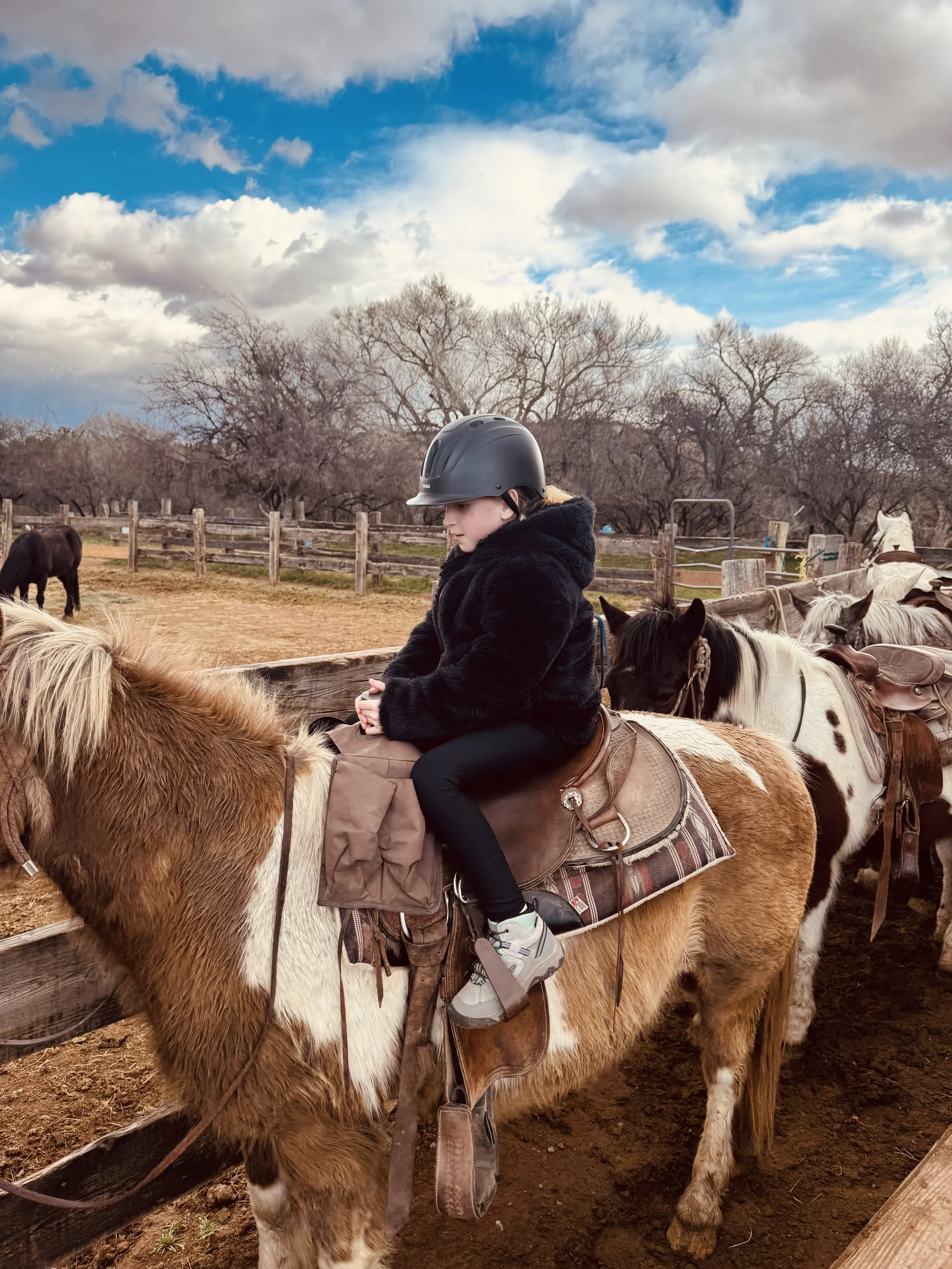
Horseback riding through the moving water crossings at Dead Horse Ranch.
Day 3: Emotional Flow & Release
Theme: Letting Movement Happen
Intention: I allow what’s been held to move.
Foundational Activities & Somatic Focus
Engaged in activities that naturally encourage emotional flow and expression, such as horseback riding through the moving water crossings at Dead Horse Ranch. An afternoonnap was planned for genuine biological rest. Quiet time at Crescent Moon Ranch, with feet immersed in the creek—the intention was simply allowing, and not analyzing or trying to problem-solve.
Deeper Clinical Rationale
Once the system feels safe, we create channels for emotion to move through the body. Movement through water is a powerful metaphor for “non-stuckness.” The nap addresses the accumulated biological debt, recognizing that emotional processing is physically taxing.
What actually happened:
This day got switched with day 4’s activities because of bad weather up north. It was stressful coordinating the change, but I quickly pivoted and reassured myself by repeating “just be with things the way they are”. I’ll write about the activities of this retreat itinerary here, but it was actually on day 4.
I woke up and did yoga while the children were swimming. The view was absolutely incredible to do yoga. I was feeling pressure for time in my stomach and wanted a slow pace, but we had the horseback ride planned. I understood the balance between our time together and everyone also needing alone time. There was a natural flow and balance in this.
We ate breakfast at the house (I love cooking on vacation) and then drove to Dead Horse Ranch. The sky was incredible and clear. It had just rained and the smell of the earth was so clean. When we got to the ranch, a cowboy, George, told us we missed our time slot by 10 minutes. I started to panic and the children were whining. I kindly asked George to help us out and coordinate another option. He was a rugged and hard man, smoking, and he smelled like manure, but said he would take us.
We started the horse ride and one of my daughters was crying and scared. I noticed my need to control and George reminded us to trust the horses. We all needed that lesson at that moment.
George, like almost all the people we met while in Sedona, had significant energy that was palpable. He spoke with pride about being in the military and working as a sniper. He talked openly about his ‘kills’ and love of guns. I was turned off by him in more ways than one, and nervous with him talking about his military experience like that around my children. I continued to focus on being with what was there and accepting. Later in the ride, George told me that although he had 7 children, only 5 were alive. He shared that one of his sons committed suicide while the other was in a motor cycle accident. George was a warrior and protector, but he had also known the pain of death from all sides. I realized I should not judge and felt compassion towards George’s spiritual path.
After the horseback ride we drove to Jerome, Arizona, an old mining town, to have lunch. It was a unique, ‘haunted’ town and we got ice cream and walked around and into the shops. The children were tired and it was time to get back to the house. We made dinner at the house and everyone did their own thing, including our evening journaling prompts:
~ What emotions surfaced today?
~ Did I allow them or push them away?
~ When did I feel most peaceful?
~ When did I feel connected to nature or family?
~ What am I learning about how I process feelings?
Day 4: Insight & Perspective
Theme: Seeing without Forcing
Intention: I see clearly without forcing answers.
Foundational Activities & Somatic Focus
A strategic shift in physical vantage points by traveling beyond Sedona to breathtaking vistas like Antelope Canyon and Horseshoe Bend. This was designed to facilitate a change in internal narrative. The physical elevation and vastness naturally promoted a sense of awe and non-personalizing of problems. Evening involved asking better, expansive questions under the night sky.
Deeper Clinical Rationale
True insight rarely comes from effortful thinking, but from a "soft gaze" allowed by a regulated system. A change in external view often mirrors a shift in internal perspective, reframing personal struggle within the context of something vast and beautiful.
What actually happened:
This day was the only day we did a typical vacation tour with a tour company. I try to do at least one each time we travel because the tour guides are usually exceptionally knowledgeable about the history of the area. This was no exception. Our tour guide, Carl, also had a curious, strong energy. Almost immediately upon meeting him he told us stories about his spiritual practices and adventures in the mountains of Sedona, which included living so near the land that he slept in a sleeping bag on the mountains for months at a time. Although he had no formal education in psychology or spiritual guidance, he reported having a near-death experience that resulted in his moving to Sedona to live a spiritual life.
My children were the only children in a van with ten other adults of various ages. I was feeling highly anxious about them remaining calm for the four-hour drive and how that might impact the other travelers if they went off the rails (no iPads on this trip to buffer the boredom of long car rides). The kids did fine, but my nervous system was on high alert.
When we got to Horseshoe Bend I was dizzy by the scale and drop-off. The children were anxious and eager to get close to the edge and I wanted to throw up. We drove through the Navajo Indian reservation and it was desolate and broken down. My heart felt sad and guilty. The earth itself looked like we were on the moon between the vast expanse of the land and the color of the rock.
The lunch provided by the tour was over-priced and tasted bad. I was anxious again. I noticed the disappointment and focused on accepting. I tried to self-regulate but felt a lot of pressure taking care of the kids on this long day. I started to realize the extent to which I’m not regularly connected to the land - this resonance of the difference between the material and spiritual worlds was a theme that was emerging.
We took another tour bus by a Native American man, Ro, into Antelope Canyon. Another strong energy around this man. When we got to the Canyon it was a tourist trap, but despite that it was unlike any place I had ever been. One of my daughters and I felt dizzy from the energies in the walls of the Canyon, which Ro said were minerals, although it was also a sacred place for the Navajo. I felt weak and emotionally vulnerable. My son also started crying, which was unusual. He talked about his ancestors, something he talks about from time to time. I was and am grateful to see their spiritual lives developing in their own way— seeing how they connect to a higher source and whatever they want to call it.
We got back very late that night as the drive was four hours each way. Everyone was exhausted and went to bed; no stargazing today. In the days that followed we reflected by ourselves to these reflection journaling prompts:
~ What did today show me about perspective?
~ What feels clearer?
~ What am I still allowing to unfold?
~ What does my future self need from me right now?
~ What kind of presence do I want to bring to my family?
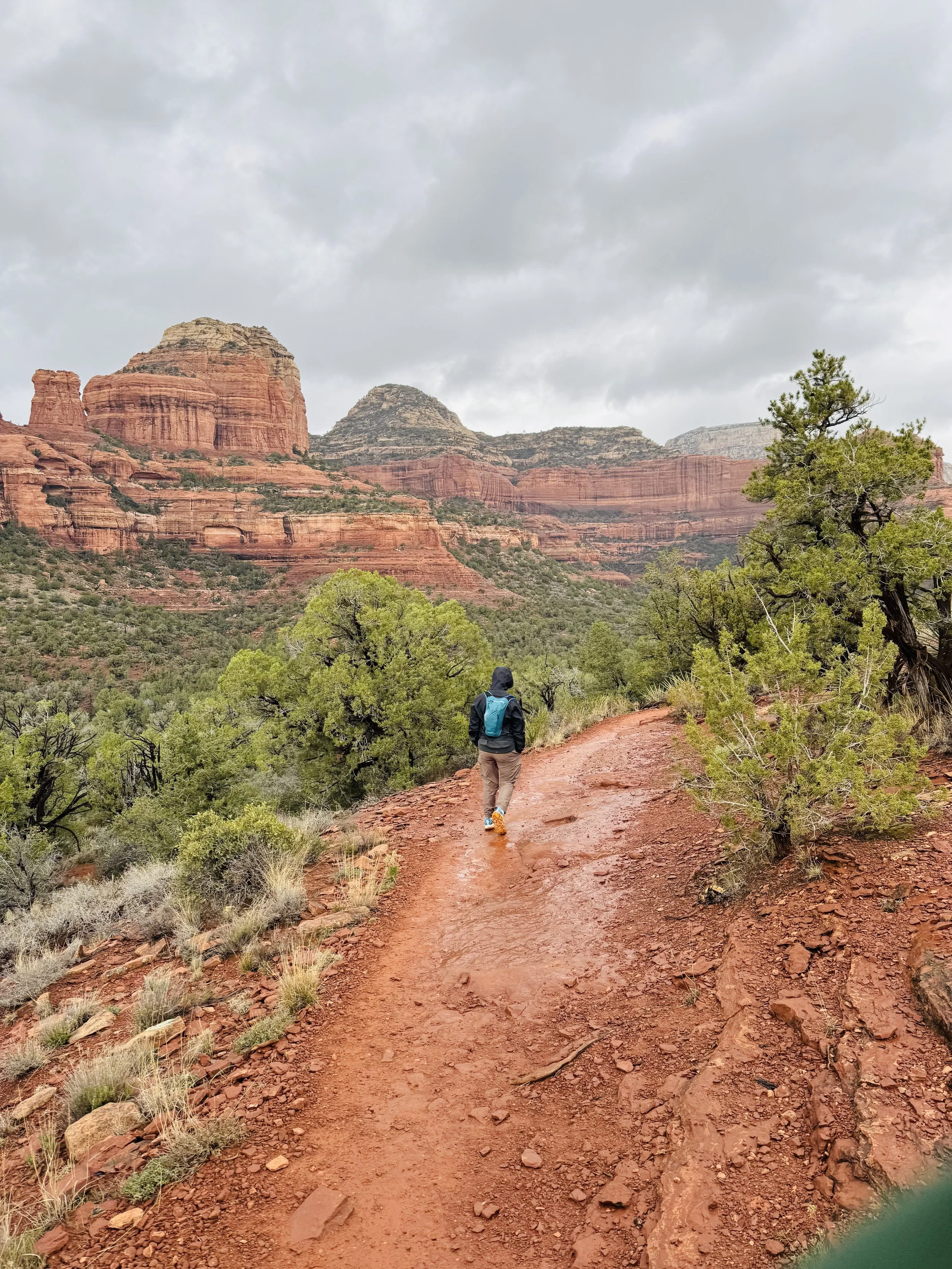
We woke up to a rainy day in Sedona, which wasn’t in our plans. It was cold outside, but I was determined we kept our plan to hike to Boynton Canyon.
Day 5: Heart Opening & Connection
Theme: Softening with Boundaries
Intention: I soften without losing myself.
Foundational Activities & Somatic Focus
Focused on relational practices, particularly during the Boynton Canyon hike (a powerful energy vortex). Practiced simple presence: pause, hand on chest, breathe together. Prioritized therapeutic bodywork for somatic integration of the week’s shifts. Concluded with writing a personal letter that was intended only for the self and not to be sent, allowing for boundary-respecting vulnerability.
Deeper Clinical Rationale
Genuine connection requires both openness and defined boundaries. The hand-on-chest practice stimulates self-compassion and connection with the heart’s rhythm. The unsent letter allows for emotional expression without the relational risk of externalizing it.
What actually happened:
We woke up to a rainy day in Sedona, which wasn’t in our plans. It was cold outside, but I was determined we kept our plan to hike to Boynton Canyon. We made breakfast and enjoyed the morning at the house, then went to a local hiking shop to get warmer gear and rain covers for the hike. The children were whining about not wanting to go, but I persisted.
The hike was extremely taxing and one of the most intense hikes we’ve ever done as a family. The views of the red rocks and mountains were like nothing I had ever seen and we got lost on the trails. Fortunately our au pair is good with reading maps on her phone and we made it back to the car after four hours of hiking in the rain and, at times, snow. When we got home the girls went swimming and my son put together an intricate Lego, while I took a long bath. We all needed a break and some space. I felt connected with the kids all day on the hike and appreciated how hard they worked. I was grateful for my body working so hard. There was a lot of love present in our family— the kids had such a sincere look of love in their eyes when they shared their feelings with me about what we were seeing. I was aware about how my ability to be mindful with the children impacted their ability to regulate.
That evening I made dinner at the house and we reflected as a family on these journaling prompts:
~ What did I notice about connection today?
~ When did I feel open?
~ When did I feel guarded?
~ What helps me feel emotionally safe?
~ What kind of connection do I want more of in our family?
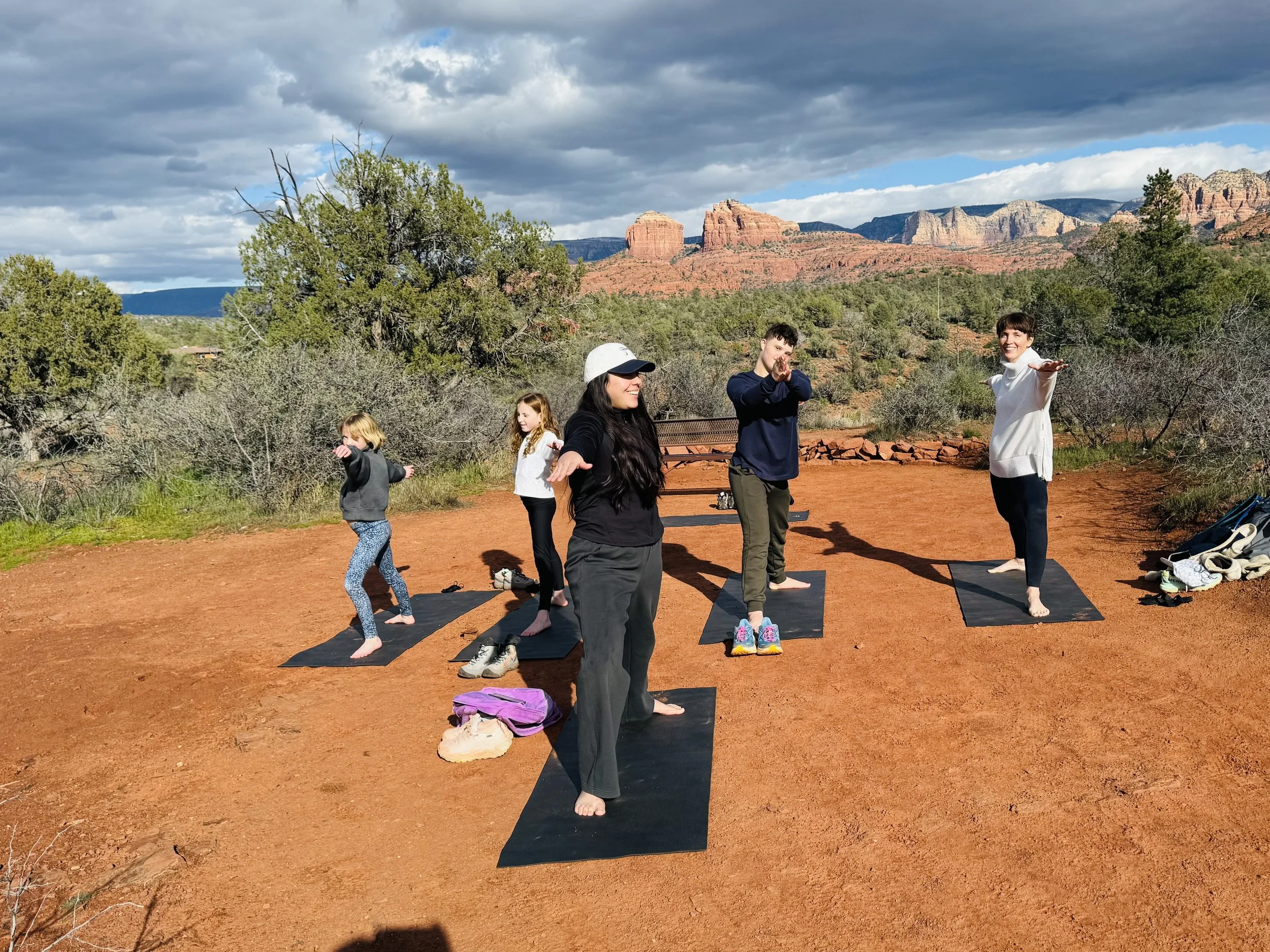
Red Rock State Park for a hike and yoga class
Day 6: Integration & Ritual
Theme: Making Meaning
Intention: What I’ve learned stays with me.
Foundational Activities & Somatic Focus
Created a simple, tangible ritual to process the experience: What am I releasing (letting go of)? What am I carrying forward (committing to)? Combined intentional movement (a final hike, gentle yoga) and deep stillness (journaled reflection) at Red Rock State Park. The adults practiced witnessing, without fixing, the children's sharing of their best and hardest moments.
Deeper Clinical Rationale
Integration is the critical step of synthesizing the new experiences into the existing self-structure. Ritual aids memory and permanence. The practice of witnessing the children’s experience teaches them that their reality is valid and held by a regulated adult.
What actually happened:
The morning began again with sunrise yoga and journaling while the girls swam, and my son and our au pair slept in. We were getting into our own little routine and feeling balanced as a family. It was becoming clearer to me the importance of being intentional in creating experiences with my family and this theme of balancing the spiritual and material worlds. I realized that I had way over-scheduled the trip and we felt better doing less. It also seemed possible to create mini-experiences with this kind of intention back home for any area where I’d like to create deeper focus and growth. The pace that supports my wellbeing, and the rhythm of the family feels steady and not pressured.
While the children were engaged in their own activities, our au pair offered to watch them while I hiked Cathedral Rock by myself. I didn’t know how much I needed that time alone. The hike was one of the most difficult hikes I have ever done; at times it was vertical and I was scared. There were many families on the hike and I had no idea how the parents were managing that. I was grateful to have this space for myself without worrying about the children's safety. My body worked really hard and I returned home to regroup with the family for the day.
After brunch, we met Ruthann Braccini, a local yoga teacher, at Red Rock State Park for a hike and yoga class. This was a simple hike, and Ruthann was highly skilled at working with different age groups. Her energy was light and airy— peaceful and playful. While my girls were doing more gymnastics than yoga, my son and our au pair were learning yoga for the first time. This allowed me to move at my own pace stretching from the difficult morning hike.
We again went to our favorite food truck after the hike and yoga. We had cocktails and there was a live band. Everyone was fully relaxed, and now into vacation mode. My son danced for hours with locals and my girls ran all over the outdoor area around the garden bar. My heart was full and my body was integrated.
Later that evening, we all reflected on our own time on the following journaling prompts:
~ What changed for me this week?
~ What do I understand better about myself?
~ What do I understand better about our family?
~ What do I want to protect when we get home?
~ What small practice can help me remember this feeling?
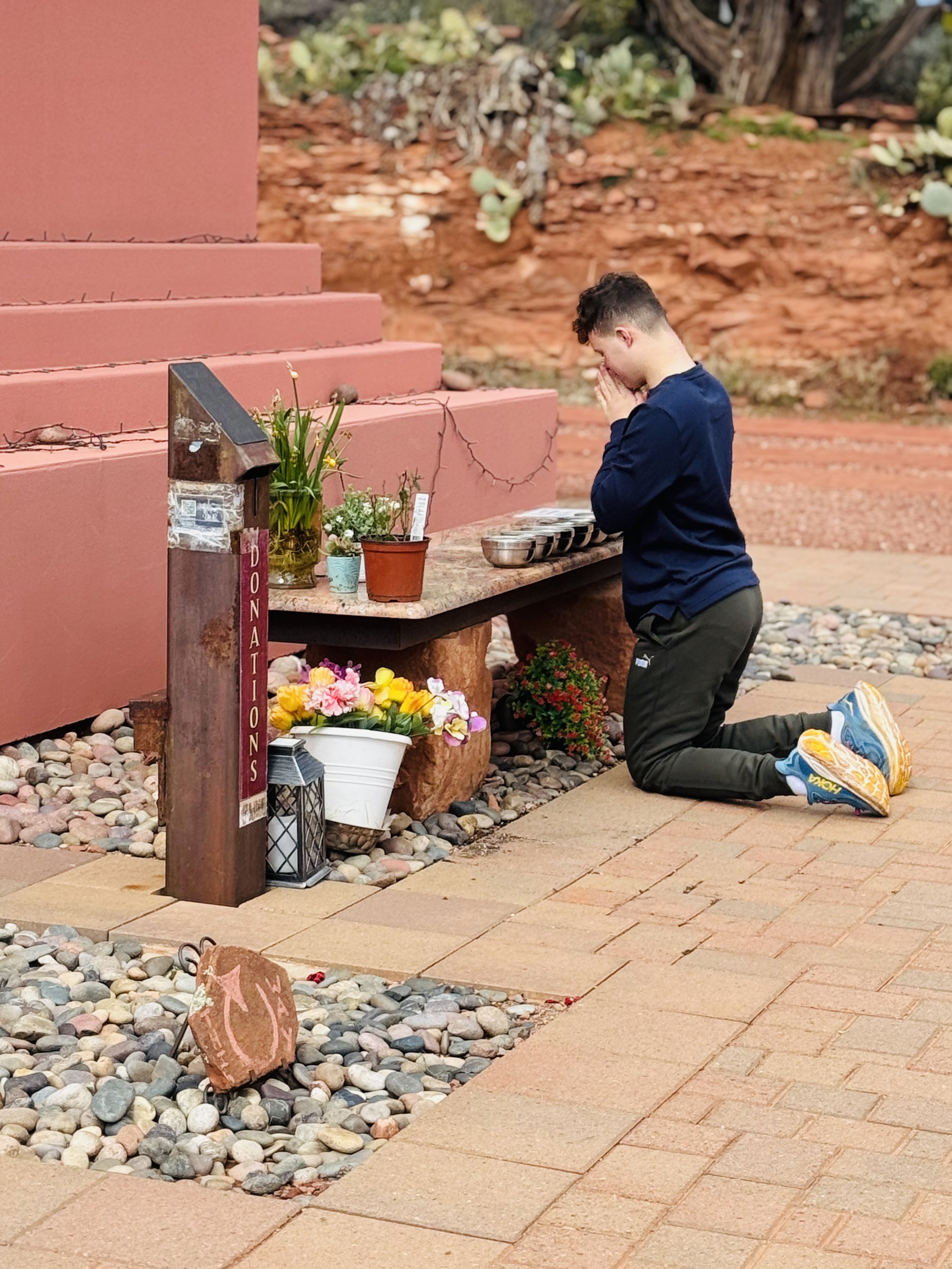
My son spent time in prayer near the temple at Amitabha Stupa.
Day 7: Departure (Without Disconnection)
Theme: Carrying it Home
Intention: This comes home with me.
Foundational Activities & Somatic Focus
The day was ended slowly and deliberately: a final sunrise walk and a sound bath. There was a strict commitment to no rushing to avoid the "re-entry jolt." The profound goal was to teach the nervous system a new, regulated pattern that could be sustained in the home environment, not to leave the experience behind as an isolated event.
Deeper Clinical Rationale
The most common failure is the immediate collapse of gains upon re-entry. By slowing down the transition, we honor the system's current regulated state, allowing it to solidify the new pattern as the default, not the exception.
What actually happened:
The morning already started to feel a bit more pressured as we knew we were leaving today. I had scheduled a Reiki energy and sound bowl healing session with Melina Fuhrmann. We started the day with a walk around Amitabha Stupa and Peace Park, a Buddhist nature center in Sedona. One of my daughters thought it was ‘stupid’ and didn’t want to go. The other daughter was thoughtful and quiet, holding my hand as we walked slowly. My son spent time in prayer near the temple. Their three little spirits continued to amaze me. Although I had an underlying feeling of anxiety— both about preparing to leave and about managing everything - I enjoyed connecting with this place.
When we arrived at Melina’s studio I felt an ease and excitement. She had 5 mats with beautiful pillows and blankets set up in her studio, which was circular and had a high ceiling. It felt like a temple and sacred space. For the next 90 minutes we lay back and took in her sound bath. To my great surprise all children were able to get through it all without moving or making a sound. When we came out of the experience we shared what we saw. Melina shared that she lived in Switzerland for over twenty years, where she studied with her teacher there. This felt synchronistic to me as I have been dreaming and planning on living in Switzerland for some time now. Like most people we met on the trip, there was again alignment that felt personal in some way.
Did we leave with a ‘no rushing to avoid the re-entry jolt?’ No. The rest of the trip back was how families usually travel—just trying to get it all together to get home. Everyone rushed and tired, but hearts were full. There is always next time.
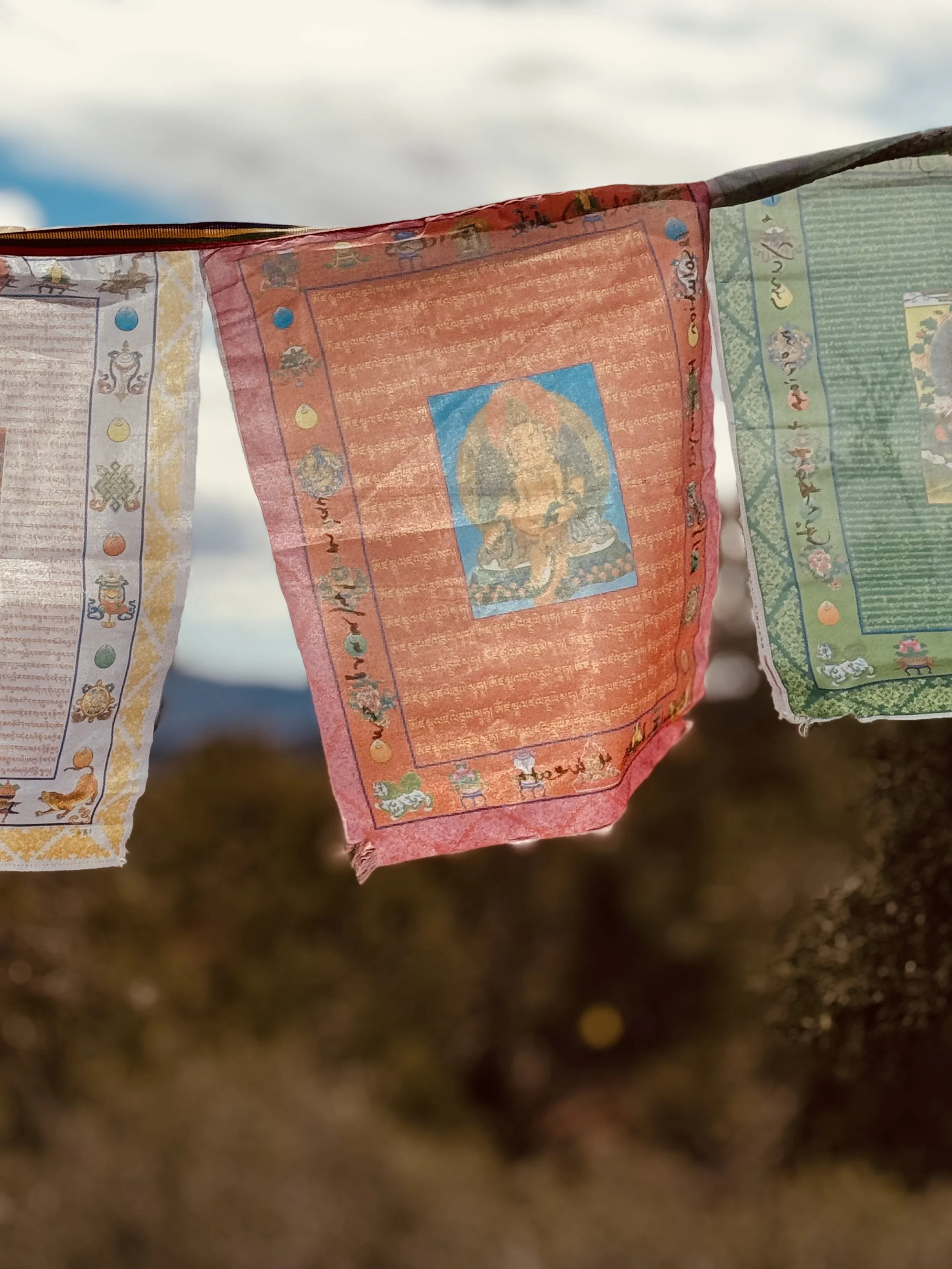
Peace Park, a Buddhist nature center in Sedona.
The Power of Sequence and Sustained Change
For me, this retreat transcended the standard definition of a family vacation. It was a strategically sequenced, nervous system-informed reset following an essential clinical arc:
Downshift → Safety → Emotional Processing → Insight → Connection → Integration → Transition
Although the sequence was designed not to be interchangeable, we adapted to the demands of children, physical and emotional needs, and external forces, including weather. Establishing Safety is important to precede Insight, as a dysregulated system cannot perceive clearly. Similarly, genuine Integration—the lasting change—cannot fully occur until difficult Feelings have been safely processed and moved through the body.
The key and most powerful takeaway for all families and clinicians is this: Children and families do not require perfect, optimized, or maximally exciting experiences to thrive. What they truly need is the consistent presence of regulated adults and the provision of intentional, predictable space for exploration and repair.
While Sedona itself is a stunning backdrop, it is not the ultimate healer. The magic lies in the intention— and bringing that back home. Sedona on this family retreat helped to create the essential energetic and environmental conditions where healing—the slow, embodied work of the family system—becomes possible. This framework remains the bedrock of my therapeutic work and my personal parenting philosophy.
To learn more about working with me and cultivating self-care for your own wellness, just contact me.
Frequently Asked Questions About Planning a Family Wellness Retreat in Sedona
Q: What makes Sedona a good destination for a family wellness retreat?
A: Sedona is renowned for its stunning red rock landscapes, energy vortexes, and abundance of wellness practitioners. Its natural beauty and slower pace make it an ideal backdrop for slowing down, connecting with nature, and creating intentional family experiences.
Q: How do I plan a wellness retreat for my family with kids of different ages?
A: Start by designing age-appropriate activities that work simultaneously—hiking, journaling, horseback riding, and yoga can all be tailored for children and adults alike. Building in unstructured time and flexibility is just as important as the planned activities.
Q: What is a nervous system reset and how does it work for families?
A: A nervous system reset is a deliberate process of moving the body and mind out of chronic stress (fight-or-flight) into a calmer, more regulated state. For families, it works best through sequenced experiences—grounding, movement, emotional expression, and shared reflection—over multiple days.
Q: What are the best hikes in Sedona for families with kids?
A: Bell Rock and Courthouse Butte offer a manageable, scenic loop for most ages. Boynton Canyon is more challenging but deeply rewarding. Cathedral Rock is best for older children or solo adults. Airport Mesa provides an easy walk with spectacular views.
Q: How do I get my kids to engage in mindfulness or journaling on vacation?
A: Provide age-appropriate prompts and give each child their own journal. Don’t force it—invite participation. Many children naturally reflect when the environment is calm and adults model the practice. Discussing prompts together at dinner works especially well.
Q: What is Internal Family Systems (IFS) therapy and how does it apply to family retreats?
A: IFS (Internal Family Systems) is a therapeutic approach that helps individuals understand and harmonize the different ‘parts’ of themselves. On a family retreat, IFS-informed practices encourage each family member to notice their internal responses, reduce self-criticism, and engage with greater compassion toward themselves and each other.
Q: How long should a family wellness retreat be to actually make a difference?
A: Seven days is ideal for moving through a full arc of settling, processing, connecting, and integrating. Even a 3–4 day intentional retreat—structured with clear themes and daily reflection—can produce meaningful shifts, especially when the intention is brought back home.
Q: How do I get started planning a family wellness retreat like this one?
A: Begin with a clear intention for the week, choose a location known for its restorative environment (like Sedona), create a loose daily framework with sequenced themes, and give each family member a journal with guided prompts. Build in flexibility—the best retreats adapt to what actually happens.
